
Autologous preparations – platelet-rich plasma (PRP) and fibrin (i-PRF/A-PRF/CGF) – activate the skin’s natural repair mechanisms. Locally delivered growth factors improve microcirculation, stimulate fibroblasts and support collagen production and remodeling. As a result, the skin becomes denser, smoother and heals more effectively.
The treatment can be used on its own or as part of a combined treatment plan following laser therapy, microneedling RF or HIFU.
The treatment may be recommended for:
PRP has a liquid consistency and acts relatively quickly, making it particularly suitable for mesotherapy and targeted improvement of skin firmness.
Fibrin forms a soft, three-dimensional matrix from which growth factors are released over a longer period. It may be particularly useful for thin, lax, “crepey” skin and scar treatment.
In many treatment plans, both fractions are combined depending on the therapeutic goal and tissue thickness.

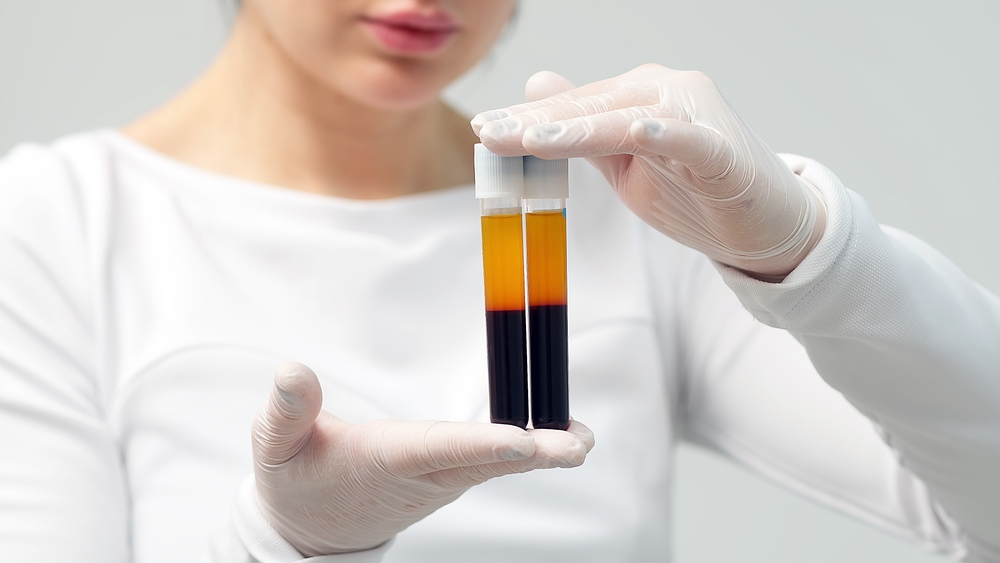
Following qualification, a small amount of blood is collected into sterile tubes and centrifuged using an appropriately selected program. A topical lidocaine cream is used for local anesthesia.
The preparation is then administered with a needle or cannula – intradermally, subcutaneously, along scars or as small deposits in the scalp. At the end of the procedure, the treated area is cooled and aftercare instructions are provided.
The entire procedure usually takes 20–40 minutes, and patients can return to their normal daily routine relatively quickly.
The first changes usually become noticeable after 2–4 weeks. The full effect develops at around 8 weeks as collagen remodeling progresses.
A typical treatment plan includes:
Temporary redness, localized swelling and small bruises may occur after treatment and usually resolve within 1–3 days. Temporary tenderness may occur following scalp treatment.
Most patients return to work the following day. Makeup can be applied once the redness has subsided.
For 24–48 hours, avoid saunas, swimming pools and intensive exercise. For 3–5 days, avoid strong acids, retinoids and intensive exfoliation. Apply SPF 50 to exposed treatment areas.
After scalp treatment, wash and dry the hair gently without rubbing.
The aim is to improve skin quality without changing facial features. PRP is administered superficially to refresh the skin and improve its texture, while fibrin can be placed deeper when a longer-lasting regenerative stimulus is required.
The expected effect is smoother, more elastic and subtly brighter skin. A typical plan includes around 3 sessions every 4–6 weeks, with maintenance treatment after 6–12 months.
The skin of the décolletage is thin and often affected by sun damage. Fibrin creates a supportive matrix for new fibers, while PRP improves microcirculation and skin tone.
Treatment can help reduce fine creases and improve skin elasticity and uniformity. A series of 3–4 treatments is usually recommended.
Autologous preparations support hair follicles during the growth phase. They can be used in the early stages of hair thinning and as a complement to trichological treatment.
A reduction in hair loss may become noticeable after 4–8 weeks, while improved visual density can develop after approximately 3 months. A typical plan includes 3–4 sessions every 4 weeks, followed by maintenance treatment approximately every 6 months.
As we age, the skin of the hands becomes thinner and more transparent. PRF/CGF administered subcutaneously can improve elasticity, while superficial PRP treatment supports smoother skin texture.
A typical treatment plan consists of 2–3 sessions at intervals of 4–6 weeks.
PRP and fibrin support the remodeling of scar tissue. For acne and postoperative scars, the preparation can be administered beneath the scar or in small deposits.
In cases involving adhesions, treatment may be combined with subcision, while stretch marks can be treated together with fractional technologies. The aim is to improve scar elasticity, reduce depressions and create a more even skin tone.
Qualification, blood collection, preparation of the selected fraction and injection are performed during a single appointment. Patients also receive individual aftercare recommendations, including skincare and sun protection.
Depending on your needs, the doctor may recommend PRP, fibrin, a combination of both preparations or additional treatments as part of a personalized treatment plan.