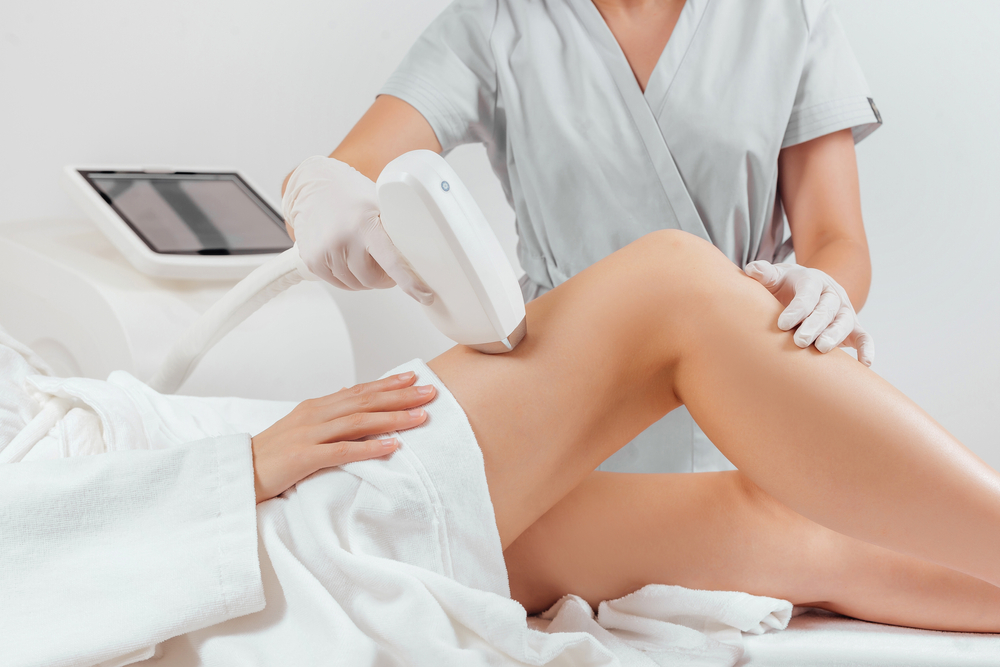

Laser hair removal provides long-lasting reduction in hair regrowth. The light beam targets melanin in the hair, converts into heat and damages the follicle during its active growth phase, while leaving the surrounding skin intact. Results improve gradually with each session because hair grows in cycles.
The treatment is recommended for people who experience irritation after shaving or have a tendency to develop ingrown hairs. It may also be used in cases of hirsutism and PCOS as part of a broader treatment plan.
Laser hair removal is suitable for athletes, people with sensitive skin and anyone looking for long-lasting smoothness without the need for regular hair removal.
During the consultation, we assess your skin phototype, hair thickness and density, tendency to develop pigmentation, medications and any underlying medical conditions.
On the day of treatment, the skin should be clean, dry and smoothly shaved. Protective eyewear is worn during the procedure. The laser handpiece delivers short pulses while the skin is cooled either by contact cooling or a stream of cold air. You may feel brief pinpricks and warmth.
After the session, the skin is cooled and a soothing product is applied. You can return to your normal activities immediately.
Results depend on the treatment area, hair color and thickness, skin phototype and hormonal balance. A standard treatment course usually consists of approximately 4–6 sessions:
Laser hair removal can be performed on the face and neck, underarms, bikini area (classic and full), buttocks, chest, back, abdomen, upper arms, forearms, thighs and lower legs.
In men, the treatment is also frequently performed on the back of the neck and beard line to help reduce ingrown hairs and follicular inflammation.
Treatment effectiveness depends on hair color and thickness – dark, coarse hair generally responds best – as well as follicle depth, skin phototype, hormonal balance, medications and regular attendance.
For darker skin phototypes, treatment parameters are adjusted using longer pulse durations and effective cooling to protect the epidermis.
The most common reactions are temporary redness and swelling around the hair follicles. Less commonly, blisters, scabs, hyperpigmentation or hypopigmentation may occur. Proper patient qualification, adjustment of laser energy to the skin phototype and effective cooling help minimize these risks.
Patients prone to ingrown hairs often experience significant improvement, including fewer inflammatory lesions and less post-inflammatory pigmentation.
We use the latest devices available on the market. An experienced cosmetologist selects the appropriate treatment parameters based on your skin phototype, treatment area and hair type. We will also advise you on appropriate post-treatment skincare. You can conveniently book your appointment via Booksy.